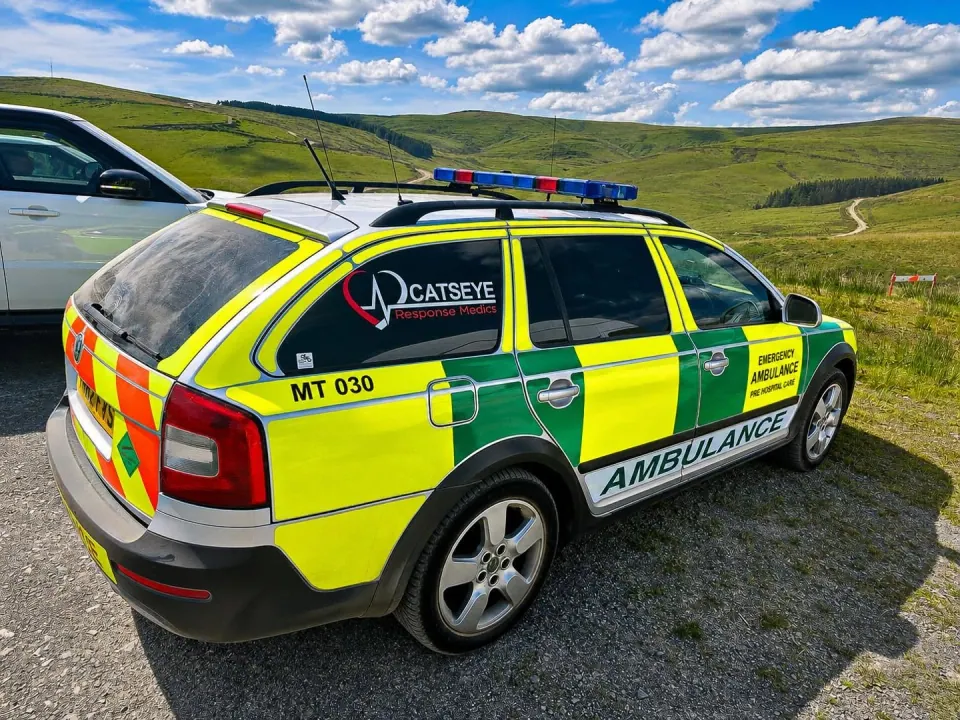
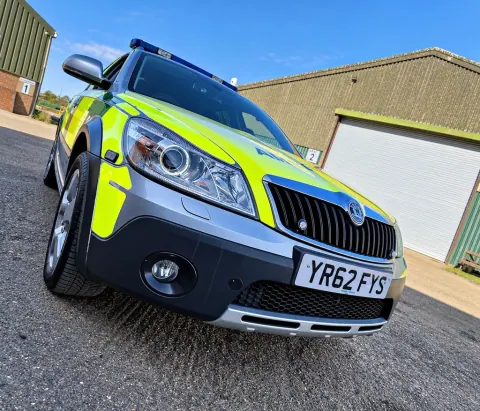
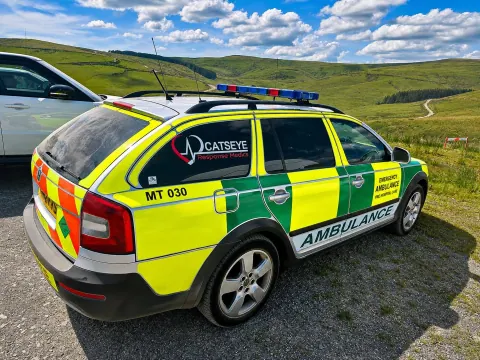
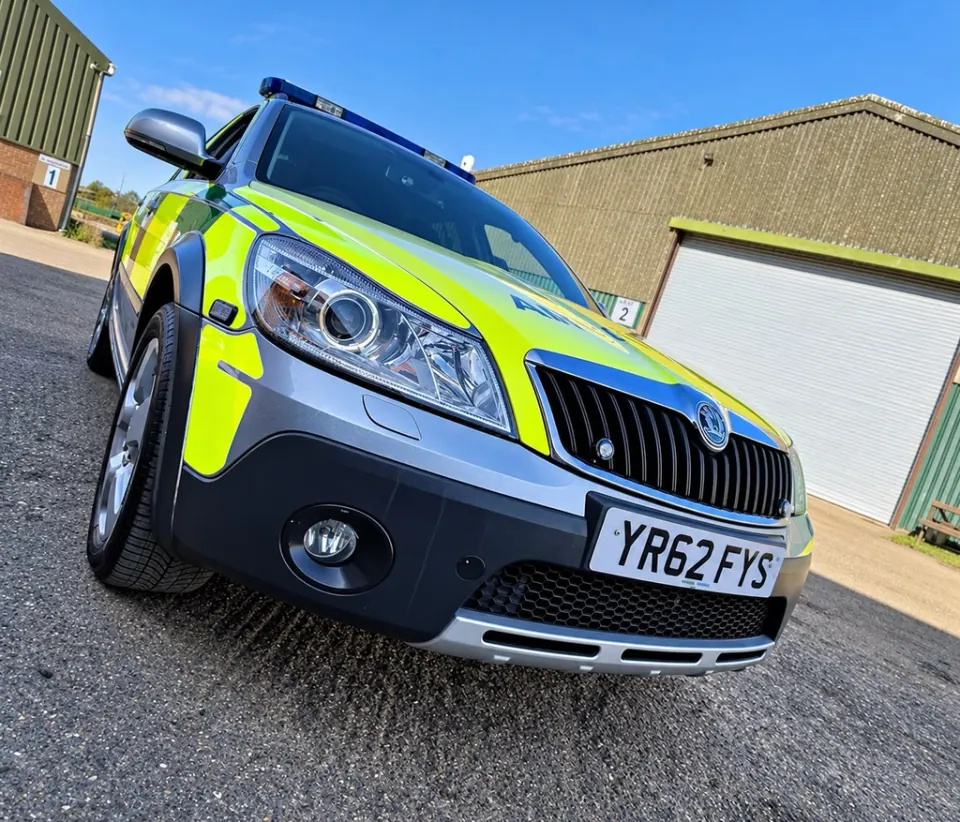
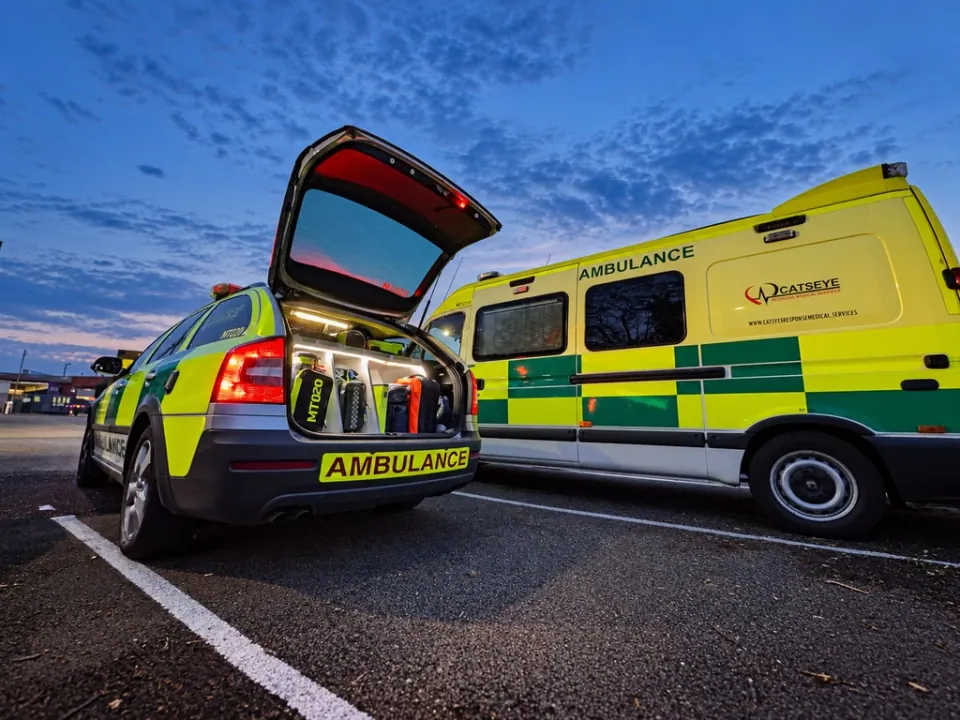
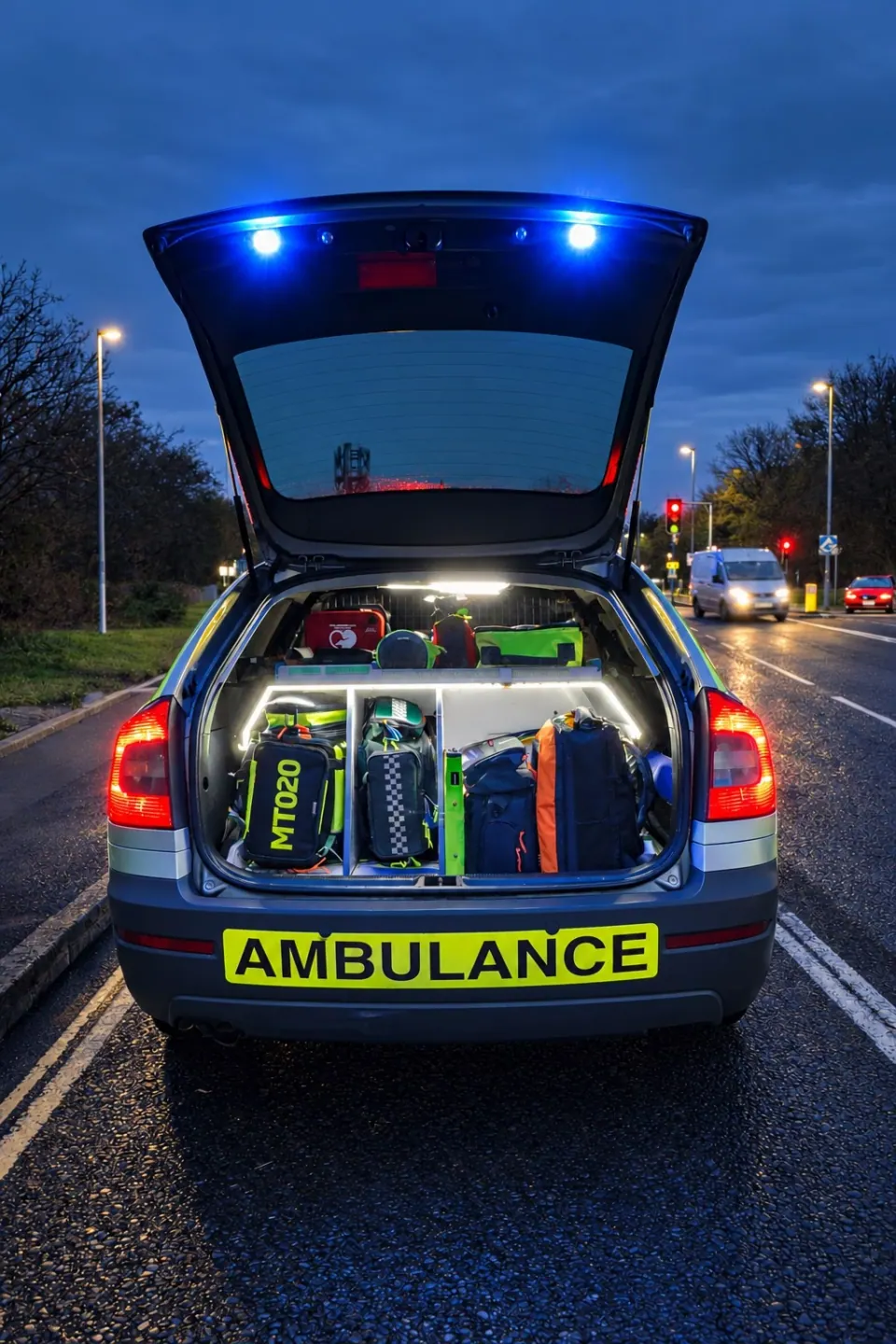
A rapid response vehicle, or RRV, is a response car with a different role from an ambulance. Our Skoda Octavia Scout 4×4 vehicles support event medical teams across Anglesey, Gwynedd, Conwy, Denbighshire, Flintshire and Wrexham. Deployment is planned around the site, access, crew and assessed needs, with clear arrangements for any incident requiring a patient-carrying ambulance.
01
Skoda Octavia Scout 4×4
The estate-car format combines space for response equipment with a vehicle suited to planned movement around an event. Four-wheel drive can be useful in some settings, but terrain, ground conditions and permitted access must still be reviewed.
02
Medical personnel and equipment
The RRV brings the assigned team and equipment to the location of an incident. Clinical roles and equipment are confirmed for the booking; the presence of a response vehicle alone does not define the level of care available.
03
Assessment and initial response
An RRV can support on-scene assessment and initial care within the team’s agreed scope. Where further care or transport is needed, the event’s escalation and ambulance arrangements should be clear in advance.
04
Course and site deployment
Running routes, spectator areas and dispersed event sites may benefit from a mobile resource. Share maps, marshal positions, restricted areas and vehicle access so the proposed deployment can be reviewed.
05
Communication with event control
Agree how incidents will be reported, how a precise location will be shared and who coordinates the response. Radio coverage, telephone signal and access contacts are useful details for larger or more remote sites.
06
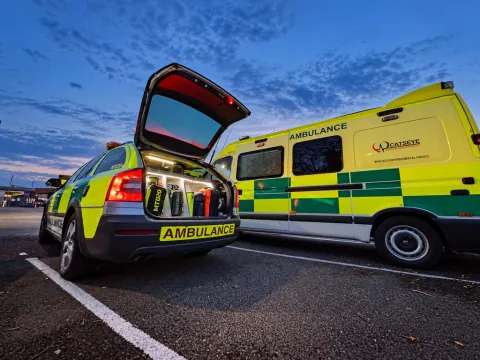
Working alongside an ambulance
An RRV can complement an event ambulance, first aid point or other medical resources. It is not a patient-carrying ambulance and should not be treated as a substitute where ambulance provision is required.
The vehicle and its role
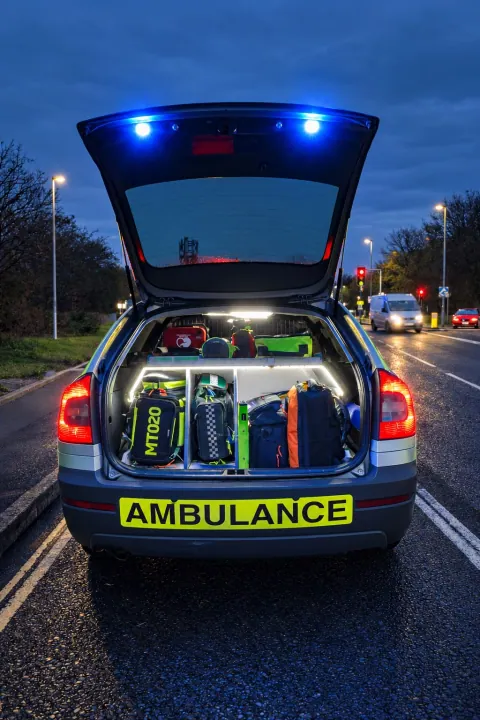
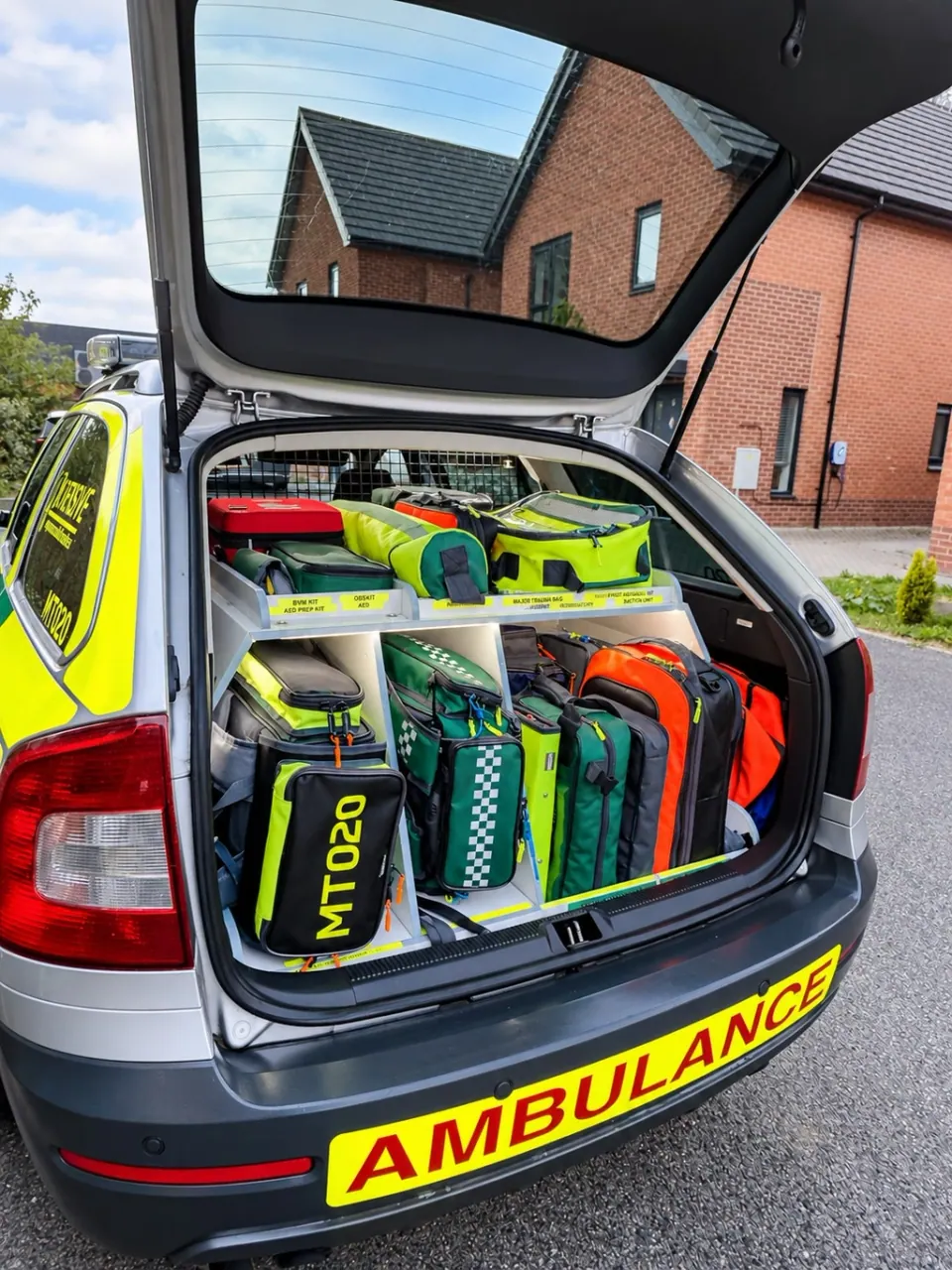
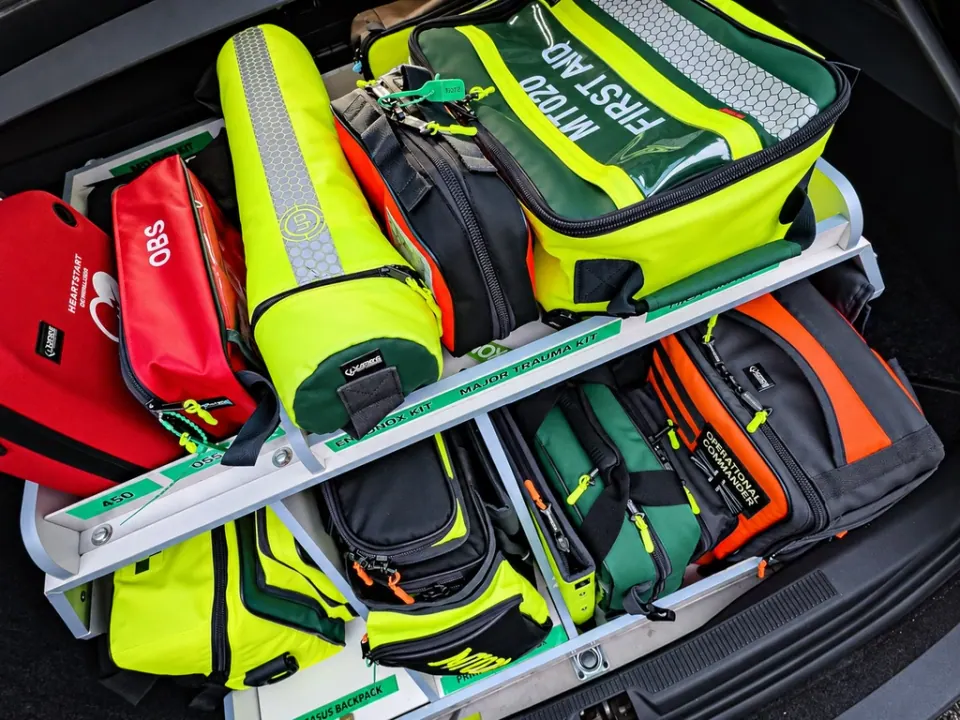
Response equipment organised for access
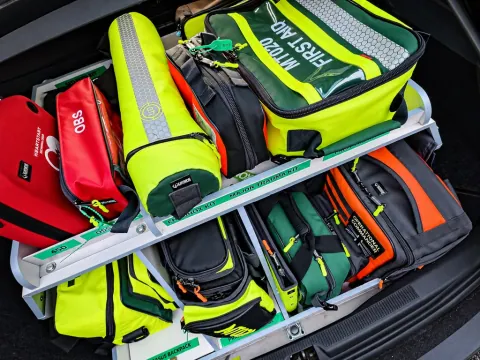
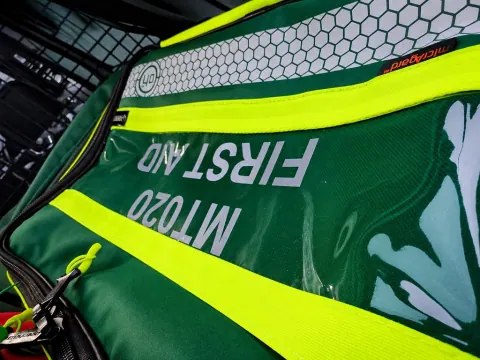
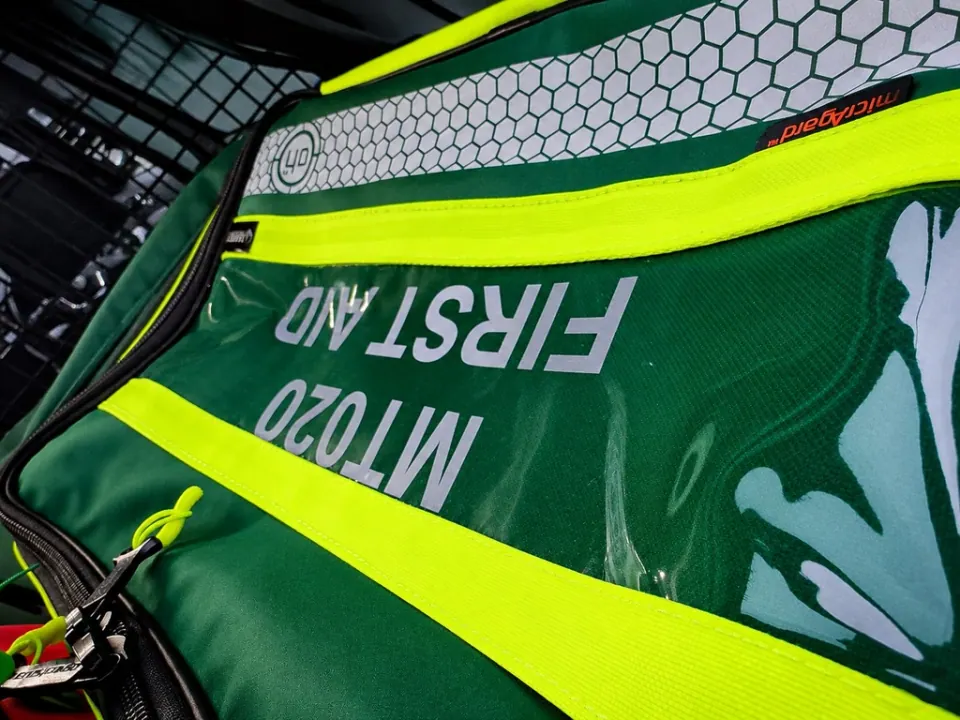
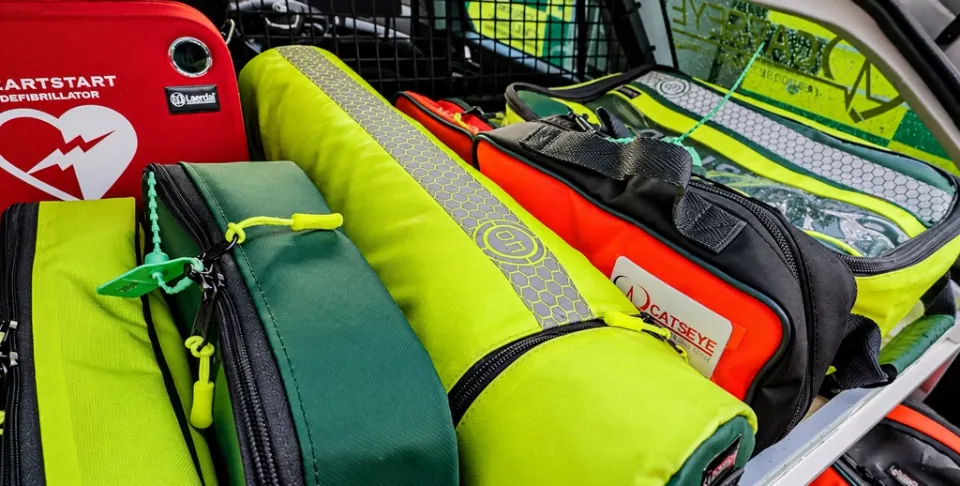
Our RRV equipment is organised in dedicated storage and response bags so the team can access it on scene. Provision may include assessment, resuscitation and trauma equipment appropriate to the assigned personnel and agreed role. The vehicle and clinical equipment should be discussed together when planning your booking.
MT030 rapid response vehicle, front viewRRV working alongside an ambulanceMT020 first aid response bagMedical equipment organised in the response vehicleRear equipment bay and response lights at duskMedical response bags carried in the RRV
Plan your booking
What to include in your enquiry
Share the event details so we can discuss the crew, vehicle role and practical arrangements.
01
Event date, site and required response hours
Include the location, timings and expected attendance, with setup and closing periods if cover is required then.
02
Route map, terrain and access restrictions
Send a site plan or programme where available and flag any details that may change.
03
Crew requirements and supporting ambulance arrangements
Explain specific medical or access requirements so the proposed provision can be reviewed before booking.
Questions organisers ask
Rapid Response Vehicles FAQs
Can an RRV transport patients to hospital?
The RRV is a response car, not a patient-carrying ambulance. Any required patient transport needs separate ambulance arrangements within the event medical plan.
Can the 4×4 reach every part of the event?
No vehicle can be assumed to reach every location. Share surface conditions, gradients, width restrictions and permissions so practical access can be reviewed before deployment.
Can we book an RRV without an event ambulance?
The appropriate combination of resources depends on the event assessment and any applicable requirements. Discuss the full medical plan, including escalation and transport, before confirming the booking.
Supporting events across North Wales
Discuss rapid response vehicles provision in Anglesey, Gwynedd, Conwy, Denbighshire, Flintshire and Wrexham. Resources and availability are confirmed for each booking.
 CRMS CYMRU · NORTH WALES